The Best DNA Test for Health: Our 5 Top Picks for 2027

Article at a Glance
- When choosing a DNA test, look for depth of analysis. Tests that only report on a handful of genes usually aren’t reputable or reliable.
- At the opposite end of the spectrum, whole genome sequencing may provide more information than many consumers actually want. Before ordering these tests, make sure you are comfortable receiving data on risk for several diseases.
- Look for labs that carry CLIA certification and are based in the United States.

I have owned Gene Food, a direct to consumer genomics health brand, for almost a decade now, and in that time we have seen tons of DNA testing companies come and go. As more DNA tests enter the market, it gets harder and harder to find the winners.
This blog post will give you a window into my knowledge of the industry so you can pick the genetic products that will truly add value for personalized health, and discard the fly by night operators trying to overhype the importance of just a few genes.
But before I get into some of my top picks for the best DNA tests by category, first you need to know what not to buy. Especially in the age of AI, it is relatively easy to spin up a logo, an app, contract with a lab, and then build a new test around a handful of genes, but these are the exact companies you want to avoid, the ones with shallow analysis and no mention of the team or mission behind the product. We see this all the time with methylation tests – just a few SNPs are marketed to the user as their entire health picture when the reality is much different.
Even short of whole genome sequencing, which is still overkill for most consumers, the type of extensive genotyping we do at Gene Food looks at over 30,000 SNPs. That’s a lot of data. The new companies marketing just a handful of genes (as 10X Health has done) often have your entire raw data file, but they are reporting on only 5-10 SNPs total in the report. This type of shallow analysis gives the DNA testing industry a bad name, it underserves the consumer and under delivers on results.
Unlock Your Personalized Nutrition & Supplement Report
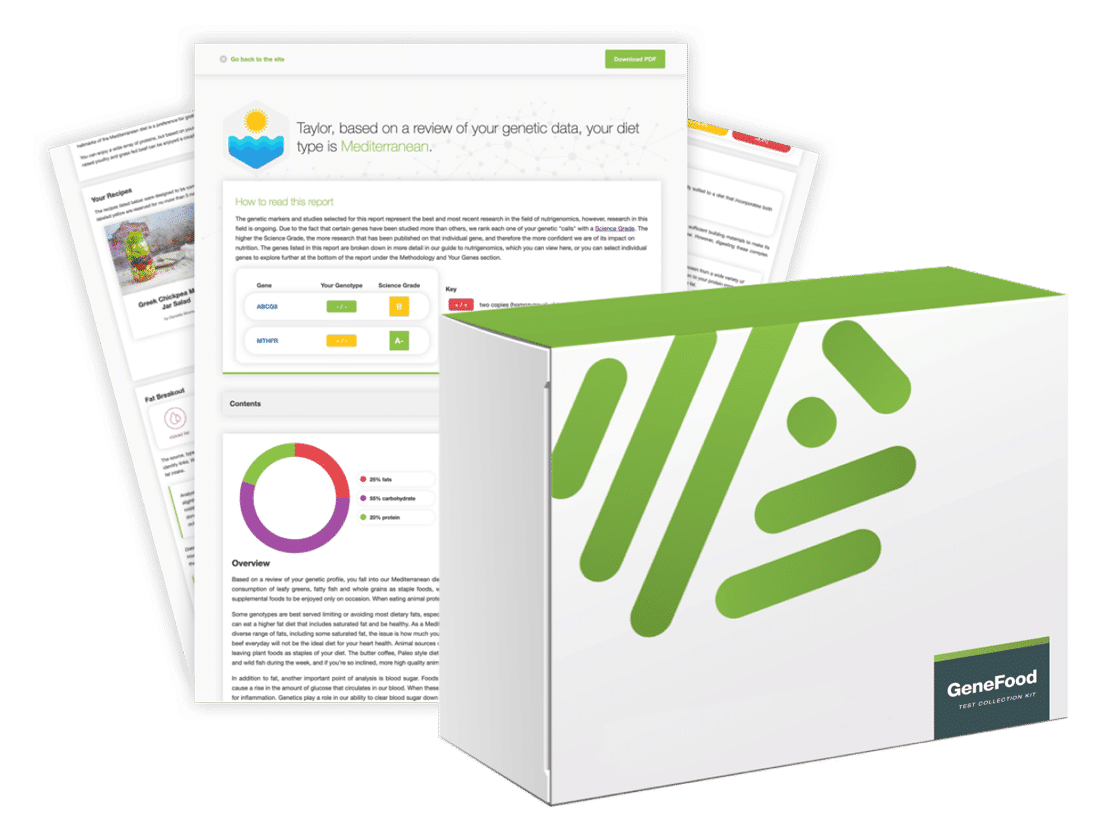
Gene Food uses a proprietary algorithm to divide people into one of twenty diet types based on genetics. We score for cholesterol and sterol hyperabsorption, MTHFR status, histamine clearance, carbohydrate tolerance, and more. Where do you fit?
Why is this becoming so common? Because many new DNA companies are marketing companies trafficking in genomics, but with no real interpretation layer.
Ask, what can this company do with my data that is useful to me? Are they overselling the importance of a handful of genes? With DNA testing products you are paying for the interpretation layer. We want to look for tests that can give the most valuable information on the data set provided. That, and make sure your test kit is being processed in the United States. One of the big complaints with some of the new companies is they use cheaper offshore labs to protect thin margins and that means dubious regulatory protocols and much longer waits for results.
The first two red flags for what to avoid when shopping for a DNA test are:
- Marketing a handful of genes as the “source of truth”
- Overseas lab partners
With those two basic tips in place, here are my top picks by category for the best DNA tests.
#1 – Gene Food – best DNA test for health
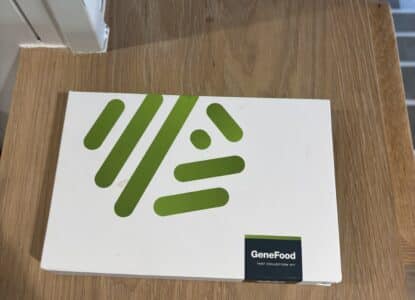
Gene Food is our top ranked DNA test kit for health, and yes, it’s our own product so take our recommendation with a grain of salt, but also hear me out. Our proprietary diet type scoring system is an algorithm we have been working on since 2018, and it began because I have been in the shoes of our users – totally confused about what to eat. After a period of high stress working in startups in NYC, it became clear that a new approach with nutrition was needed, but when I looked in earnest for answers to the question “what should I eat,” all I got was conflicting advice.
We built Gene Food to give people confused by conflicting nutrition and health advice information they could use to create a diet that worked for them, and rule out options that are heavily marketed, but that won’t work for their unique physiology. A good example, is the carnivore diet, or the closely related ultra low carb diet. For some of us, these diets simply do not and cannot work. Eating this much saturated fat triggers a cholesterol response that adds major risk for those ill suited to very high fat diets. In short, their LDL shoots up and studies like KETO-CTA teach us just how dangerous that response is for sensitive genotypes. In KETO-CTA (later retracted by authors amidst controversy over failure to report primary outcome), 66 participants started with zero plaque. After 1 year on a very high fat diet, plaque progressed in 6 of those 66 individuals — meaning 9% developed new visible plaque in just one year, despite being in a supposedly low risk group. Those who progressed had +18.8 mm³/year in soft plaque progression, 3–5x higher than typical, and on par with senior aged cohorts with advanced type 2 diabetes. So, the bottom line is that choosing the wrong diet, no matter what YouTube tells you, can put you at serious risk and age you fast. Gene Food can help you get in the weeds on a whole host of health issues, but perhaps the most valuable thing it can do is help consumers rule out fad diets, and help them to understand why those diets won’t work for them.
In addition to our core reports on methylation and micronutrients, histamine, fat metabolism, and carbohydrate response, we add new complementary health reports based on the latest GWAS data.
Unlock Your Personalized Nutrition & Supplement Report
Gene Food uses a proprietary algorithm to divide people into one of twenty diet types based on genetics. We score for cholesterol and sterol hyperabsorption, MTHFR status, histamine clearance, carbohydrate tolerance, and more. Where do you fit?
#2 – Ancestry – best DNA test for ancestry
As the name denotes, it probably comes as no surprise that Ancestry ranks as my top pick for DNA testing for digging into your family tree. I have used the “U.S. Discovery” platform recently to trace back my roots on my Mother’s side of the family and have found even the free results quite useful. Prior to investing in a DNA test, Ancestry allows users to create a family tree by searching public records. For more hints and records about your family, you can opt in to the U.S. Discovery product like I did for $24.99 per month and no DNA test is required. And that is the true differentiator with Ancestry, they have built a public records database that is intuitive and easy to use and DNA is an enhancement not a necessary component. Just this morning, I received a hint about my Mother which contained a High School yearbook picture of her I’d never seen before. Very cool. Be aware that the latest Ancestry tests, should you decide to sequence, do not contain actionable health SNPs in the raw data file, so you can’t use them on third party apps.
#3 – Nucleus – best DNA test for family planning
We have reviewed Nucleus separately, so if you are interested in their entire offering, have a look at that blog post. However, the most interesting thing the company is doing right now is their Nucleus IVF+ product, which has the ambitious slogan “Longevity starts at birth.” The company offers a service that does genetic analysis on IVF embryos. Traditional clinics stop at viability — focusing on rare genetic conditions at birth. Nucleus IVF+ also screens for chronic diseases like cancers, Alzheimer’s, and heart disease, aiming to optimize the child’s chances of thriving throughout life. The process involves getting matched to a clinic and the service starts at $9,999 for four months. Nucleus is helping parents optimize the IVF process and increase the success of the ultimate pregnancy and life of the new baby.
#4 – Nebula – best DNA test for rare health conditions
Unlock Your Personalized Nutrition & Supplement Report
Gene Food uses a proprietary algorithm to divide people into one of twenty diet types based on genetics. We score for cholesterol and sterol hyperabsorption, MTHFR status, histamine clearance, carbohydrate tolerance, and more. Where do you fit?
I’ve used Nebula in the past and discussed the results of my raw data upload results. Nebula Genomics, through a subsidiary called DNA Complete, offers whole genome sequencing for the consumer market. Nebula has real street cred in the genomics industry having been founded by the famous geneticist, George Church. While DNA Complete is credible, for most consumers, this level of data will be overkill. The main reason to pursue WGS is searching for rare and novel variants that are linked to disease. This is the type of information that some of us seek out, but also the kind of information that many find upsetting. Many of the DNA Complete reports focus on diseases such as cancer and autoimmunity. For example, this is a small sample of the cancer reports available on DNA Complete’s reporting list: Acute lymphoblastic leukemia, Aerodigestive squamous cell cancer, Bladder cancer, Bone cancer, Brain cancer, Breast cancer (x3), Cervical cancer. Ordering tests like this can be valuable, but if you are in the optimization mindset, a lifestyle genomics product may be lower stress and more actionable overall.
One added bonus: as we do at Gene Food with our Health Intelligence product, Nebula adds to their reporting with new research which allows users to stay on top of a field that moves fast.
#5 – Self Decode – best DNA test for biohackers
Self Decode is an innovative, but expensive, DNA testing service that began in a similar fashion to Gene Food, with a blog called Self Hacked. Joe Cohen, the founder of Self Hacked, is one of the most respected biohackers in the industry and there is a lot to learn from Self Decode’s platform. There is so much data that the reports can feel like drinking from a firehose and are often best navigated with the help of a practitioner. Having said that, Self Decode is the exact opposite of the shallow interpretation layers I warned about above. The app is a comprehensive deep dive into the latest genomics research that has been constructed over a decade of hard work. Notably, SelfDecode filed for a US patent on an algorithm that adjusts polygenic risk scores based on an individual’s ancestry. This is a big development because it ensures clinical relevance across ethnicities for the traits Self Decode reports on.
The bottom line
As you search for a DNA test that fits your needs, be sure to check how long the provider has been in business, where their lab is located, and think long and hard about whether their interpretation layer has value based on your goals. Companies that try to sell you on the scoring of just a handful of genes are the ones to pass on.